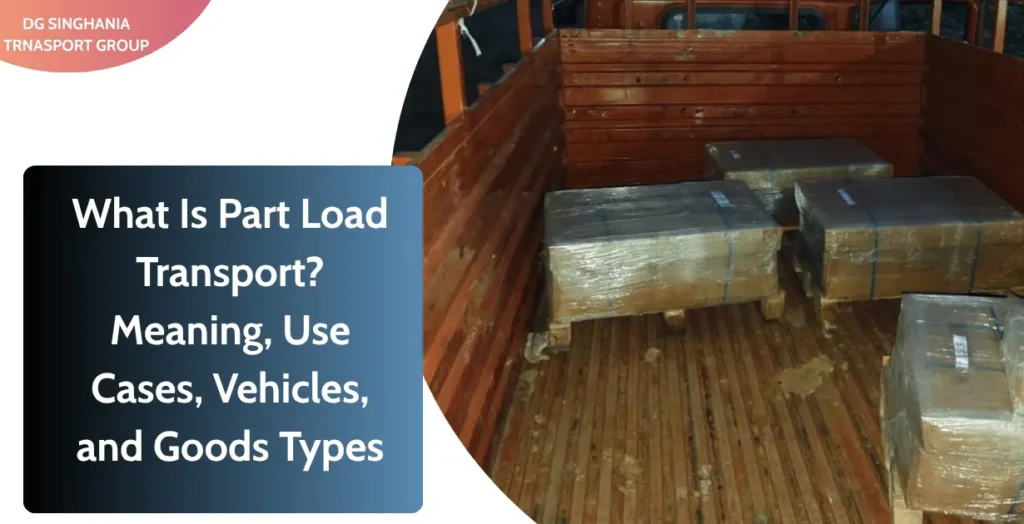
Part Load transport means your goods move in a shared truck with other consignments instead of booking a full vehicle. It is usually suitable for smaller commercial shipments where the load does not justify a dedicated truck movment . Businesses often use Part Load transport for cartons, machine parts, packaging material, electrical goods, hardware items, and lower-volume stock movement.
If your shipment is genuine but not large enough for a full truck, Part Load is often the practical option. In transport language, this is the middle ground — load chhota bhi nahi hai, but full truck jitna bhi nahi hai.
Part Load Transport: Quick Summary
Usually not suitable when: goods are fragile, urgent, oversized, or need dedicated handling
Best for: smaller commercial shipments
Transport model: shared truck movement
Common goods: cartons, machine parts, packaging stock, electrical goods, hardware items, industrial components
Common vehicles: Tata Ace, pickup, 14 ft truck, 17 ft truck, 20/22 ft truck
Usually suitable when: cost control matters and full truck booking is not practical
What is Part Load transport?
Part Load transport is a shipment model where your goods move in a shared vehicle with other consignments instead of using one dedicated truck.
In simple terms, you pay for the space your goods use, not for the full truck.
This is commonly used when:
- the shipment is smaller,
- the goods are regular commercial items,
- and dedicated vehicle use is not necessary.
Transport line mein yeh bahut common requirement hoti hai. Material move karna hota hai, but quantity full truck level ki nahi hoti.
How does Part Load transport work?
Part Load transport works by aligning a smaller shipment into a shared vehicle movement based on route, load profile, and handling suitability.
Usually, these details are needed first:
- pickup location
- delivery location
- goods type
- quantity
- weight or dimensions
- preferred movement date
- special handling notes, if any
Once these are clear, the shipment can be planned in a suitable shared movement arrangement.
Shared load ka matlab random movement nahi hota. Proper route alignment, loading logic, and transport coordination phir bhi required hoti hai. contact our team for more details.
Who should use Part Load transport?
Part Load transport is usually suitable for businesses moving smaller consignments that do not need a full truck.
It is commonly useful for:
- manufacturers sending limited stock
- distributors moving smaller shipments
- dealers transferring stock to another branch
- suppliers sending machine parts
- businesses moving packaging material
- companies handling regular lower-volume intercity dispatches
In practical transport work, these are very normal Part Load cases.
For example:
- 15 cartons of electrical goods
- machine spare parts for a factory
- packaging rolls
- hardware stock
- branch transfer material
- smaller quantities of industrial components
When is Part Load transport the right choice?
Part Load is usually the right choice when the shipment is smaller and booking a full truck load is not commercially practical.
Choose Part Load when:
- the load is not enough for a full truck
- goods can move safely in a shared arrangement
- budget matters
- dispatch is planned but not highly urgent
- smaller consignments move regularly
- the shipment is real, but moderate in size
Yeh especially useful hota hai when a business wants proper movement without paying for unused truck capacity.
Which goods are commonly moved in Part Load transport?
Part Load transport is often used for normal commercial goods that are smaller in quantity and suitable for shared movement.
Common goods examples:
- cartons of packaged products
- electrical goods
- hardware items
- auto parts
- machine accessories
- industrial components
- packaging material
- plastic goods
- garment stock
- branch transfer stock
- lighter raw material
- mixed commercial stock
Important point: har goods type automatically Part Load ke liye suitable nahi hota. Packing, quantity, route, and handling condition always matter.
Which vehicles are commonly used in Part Load transport?
Part Load consignments are commonly moved in different vehicle types depending on route, shipment size, and goods profile.
Common vehicle examples:
- Tata Ace / Chhota Hathi
Usually used for smaller movement or feeder movement. - Pickup vehicles
Suitable for moderate smaller consignments. - 14 ft truck
A common option for regular commercial loads where shipment size is limited but meaningful. - 17 ft truck
Useful where the load is a bit larger and shared movement is still practical. - 20 ft / 22 ft truck
Often used on intercity routes where multiple consignments are aligned together.
Vehicle selection sirf route se decide nahi hota. Goods type, quantity, loading pattern, and handling condition also matter.
What are the main benefits of Part Load transport?
Part Load transport is useful because it gives businesses a workable movement option for smaller shipments.
Main benefits:
- better cost control for smaller loads
- no need to book a full truck
- practical for recurring smaller dispatches
- useful for many day-to-day commercial goods
- better use of available transport capacity
- suitable where the requirement is moderate but genuine
In simple terms, it helps balance movement need and commercial practicality.
When is Part Load transport not suitable?
Part Load is not the right choice for every shipment.
Part Load may not be suitable when:
- the goods are highly fragile
- delivery is very urgent
- the shipment needs dedicated handling
- the goods should not move with mixed consignments
- the material is oversized
- the quantity already justifies a full truck
- the load is sensitive in terms of value, shape, or movement risk
For example, these may be better suited to dedicated movement:
- heavy machinery
- delicate equipment
- oversized items
- urgent factory dispatch
- larger palletized loads
Yahan sirf rate dekhkar decision lena sahi nahi hota. Sasta option har baar best option nahi hota.
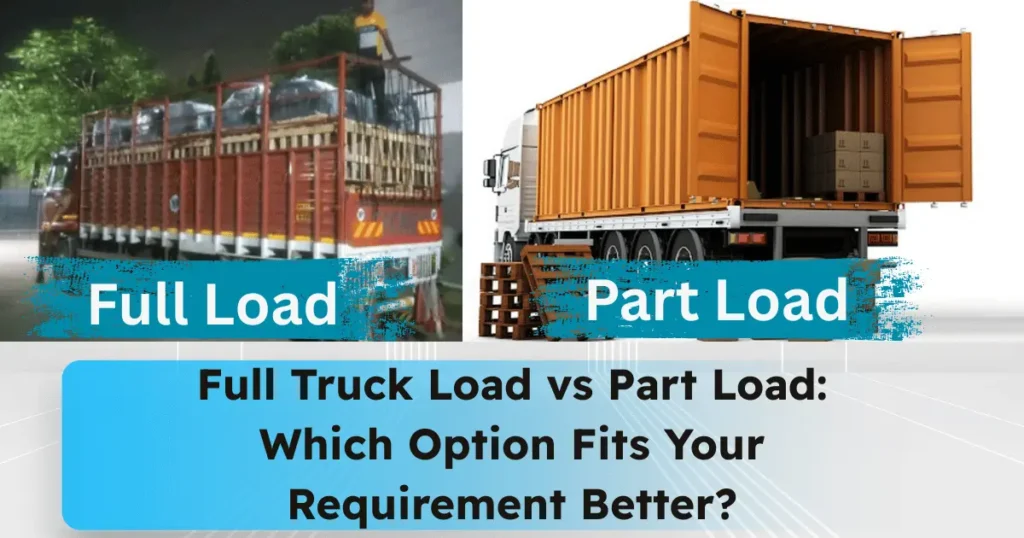
Part Load vs Full Truck Load: what is the difference?
The main difference is vehicle sharing.
In Part Load:
- your goods move in a shared vehicle
- you pay only for the space used
- movement is aligned with other consignments
In Full Truck Load:
- one customer books the full vehicle
- the truck is dedicated to one shipment
- movement is more direct
Part Load is usually better when:
- shipment size is smaller
- cost efficiency matters
- timing is flexible
- goods can move in a shared setup
Full Truck Load is usually better when:
- the load is large
- movement is urgent
- handling should be minimized
- dedicated transport is required
What should you check before booking Part Load transport?
Before confirming Part Load, the shipment should be reviewed properly.
Check these details:
- Goods type: Is it a regular commercial load or something more sensitive?
- Quantity: Is the load genuinely part-load size?
- Weight and dimensions: These affect planning more than many customers expect.
- Route: Pickup and delivery points matter directly.
- Timing: If the delivery timeline is very tight, Part Load may not fit.
- Handling condition: Fragile or sensitive goods should be declared clearly.
- Vehicle suitability: Even in shared transport, the right vehicle still matters.
Jitni clear details hongi, utni better planning hogi.
Common mistakes people make with Part Load transport
Some mistakes come up again and again in actual transport work.
Common mistakes:
- choosing Part Load only to save money
- not sharing exact quantity
- not telling actual weight or dimensions
- assuming every smaller load should move in shared transport
- not mentioning fragile or sensitive goods
- expecting urgent direct movement under a Part Load setup
Transport mein half issue tab start hota hai jab shipment details properly shared nahi hoti.
Should you choose Part Load transport?
Choose Part Load transport when:
- your shipment is smaller
- full truck booking is not practical
- goods can move in a shared vehicle
- cost control matters
- delivery timing has some flexibility
Consider Full Truck Load instead when:
- the shipment is urgent
- the goods are fragile or sensitive
- the load is large
- dedicated movement is needed
Simple rule: best option woh hota hai jo load profile ke hisaab se fit baithe, not just the cheapest one.
Why Part Load transport matters in real business movement
Not every shipment is bulk shipment.
A lot of real transport work happens in this middle zone:
- load important hota hai,
- quantity moderate hoti hai,
- movement genuine hota hai,
- but full truck book karna practical nahi lagta.
That is exactly where Part Load becomes useful.
For many businesses, it helps balance:
- budget
- shipment size
- dispatch planning
- and practical transport execution
That is why Part Load remains one of the most useful transport options for smaller commercial consignments.
Frequently Asked Questions
What does Part Load mean in transport?
Part Load means your goods move in a shared truck with other consignments instead of a dedicated full vehicle.
Who should use Part Load transport?
It is usually suitable for businesses moving smaller commercial loads such as cartons, machine parts, packaging material, electrical goods, or limited industrial stock.
Is Part Load cheaper than Full Truck Load?
For smaller shipments, it is often more cost-efficient because you pay only for the truck space your goods use.
Which vehicles are used in Part Load transport?
Part Load shipments may move in Tata Ace, pickup vehicles, 14 ft trucks, 17 ft trucks, or 20/22 ft commercial trucks, depending on load and route.
Is Part Load suitable for urgent shipments?
Not always. If the movement is highly urgent or needs dedicated transport, Full Truck Load may be more suitable.
What details should be shared before booking Part Load?
Pickup point, delivery point, goods type, quantity, weight or dimensions, preferred date, and handling notes should be shared clearly.
Can Part Load work for recurring business dispatches?
Yes. It is often a practical option for businesses that regularly send smaller consignments.
Final decision summary
Part Load transport is usually the right choice when the goods are not enough for a full truck, but the requirement still needs proper and practical movement planning.
If the shipment is:
- smaller,
- regular,
- non-fragile,
- and flexible enough for shared movement,
then Part Load can be a very workable transport option.
If the shipment is:
- urgent,
- fragile,
- oversized,
- or large enough for dedicated movement,
then Full Truck Load may be the better fit.