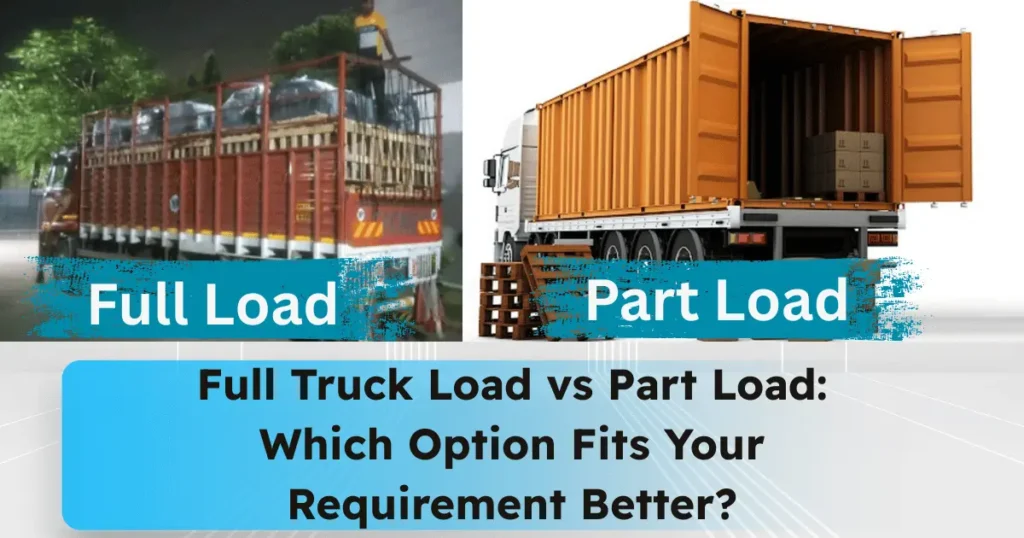
Full Truck Load is usually better when the shipment needs a dedicated truck, direct movement, or better dispatch control. Part Load is usually better when the shipment is smaller and booking a full vehicle is not commercially practical. The right choice depends on load size, urgency, goods type, handling needs, route, and budget.
Truck lena hai — but should it be Full Truck Load transport services or Part Load transport services?
On paper, the difference looks simple. In actual transport work, it affects:
- cost
- dispatch timing
- handling exposure
- vehicle use
- movement control
This guide explains the difference clearly, so you can decide which option fits your requirement better.
Quick Summary
- Choose Full Truck Load when: the shipment is large, urgent, sensitive, or needs a dedicated vehicle
- Choose Part Load when: the shipment is smaller, can move in a shared truck, and full vehicle booking is not practical
- FTL is usually better for: bulk goods, palletized stock, raw material, larger commercial loads
- PTL is usually better for: cartons, smaller stock transfers, machine parts, packaging material, regular lower-volume dispatches
- FTL gives more control
- PTL usually gives better cost alignment for smaller shipments
Simple rule: agar load full truck justify karta hai, FTL usually makes sense. Agar load smaller hai and shared movement practical hai, PTL often works better.
What Is Full Truck Load?
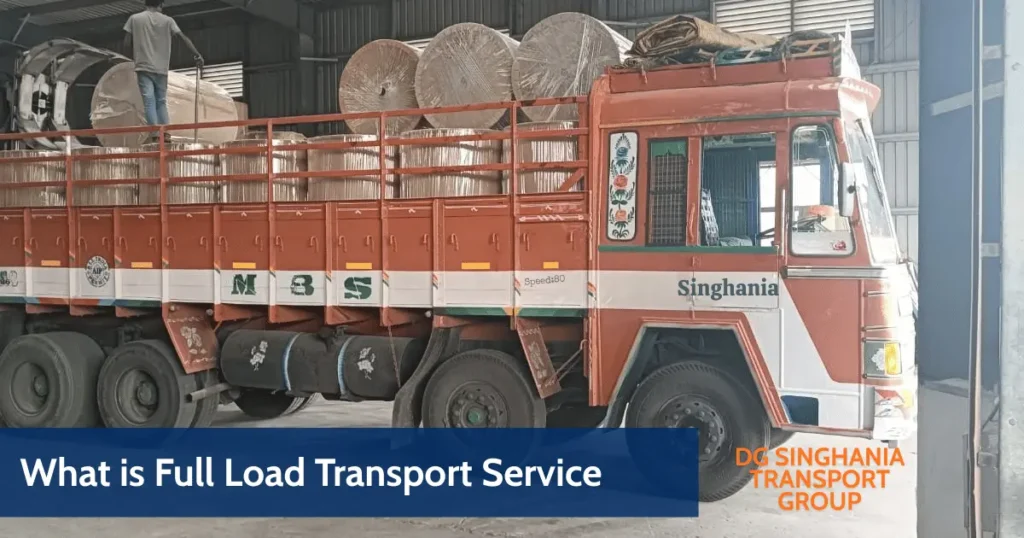
Full Truck Load means one customer uses a dedicated truck for one shipment.
This does not always mean the truck is completely full. In real operations, businesses choose FTL because they need:
- direct movement
- fewer handling points
- better timing control
If your shipment needs this kind of movement, you can also explore our Full Truck Load transport services page in more detail.
What Is Part Load?
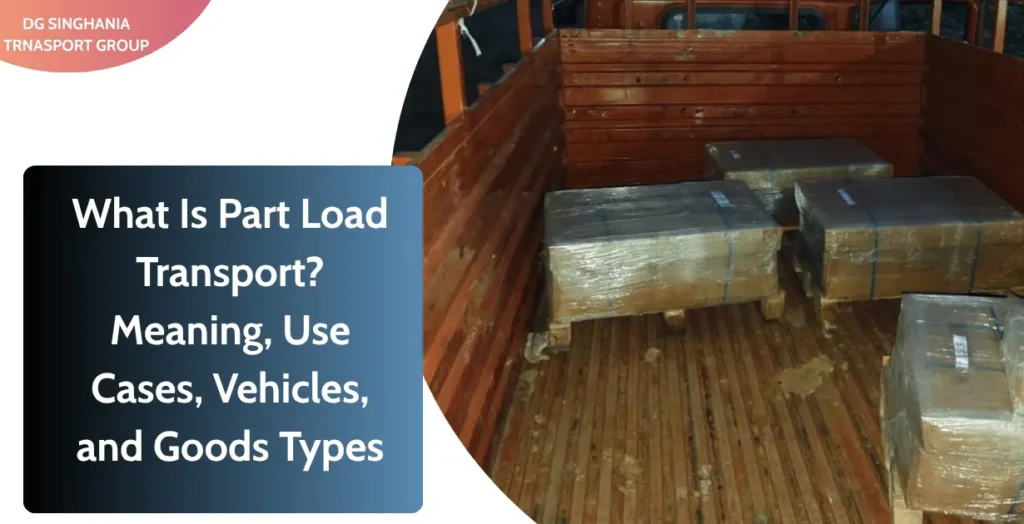
Part Load means the shipment moves in a shared truck with other consignments.
This works when:
- shipment is smaller
- full truck booking is not practical
- cost efficiency is important
If your load is smaller and flexible, our Part Load transport services page explains when shared movement becomes the better option.
What Is the Main Difference Between FTL and PTL?
The biggest difference is vehicle exclusivity.
In Full Truck Load
- one customer uses the truck
- the vehicle is dedicated to one shipment
- movement is more direct
- handling stages are usually fewer
In Part Load
- multiple consignments may move in the same vehicle
- the shipment shares truck space
- cost is usually lower for smaller shipments
- movement planning is broader because other loads may also be aligned
That is the core difference.
But in actual business transport, the real question is not only “shared or dedicated.”
The real question is: which one fits the shipment better?
When Full Truck Load Is the Better Choice
FTL usually works better when:
- load size is large
- dispatch timing matters
- goods should not mix with other consignments
- handling needs to be minimal
- direct movement is required
Common FTL examples:
- raw material
- palletized goods
- factory dispatch
- warehouse stock movement
- bulk commercial goods
When Part Load Is the Better Choice
PTL works better when:
- shipment is smaller
- cost efficiency matters
- timing is flexible
- goods can move in shared format
Common PTL examples:
- cartons
- electrical goods
- machine parts
- packaging material
- smaller stock transfers
FTL vs PTL — Side-by-Side
Truck Use
FTL → dedicated
PTL → shared
Load Size
FTL → large
PTL → small
Control
FTL → high
PTL → moderate
Cost Logic
FTL → better for bulk
PTL → better for smaller loads
Which Option Is Better for Cost?
Many businesses only look at price.
Yes — PTL looks cheaper for smaller loads.
But if:
- shipment is already large
- or direct movement avoids delay
Then FTL may actually be the better decision.
Better question:
“Which option is more practical?”
Which Option Is Better for Control?
- FTL → better control
- PTL → shared coordination
If timing, unloading, or planning matters → FTL is stronger.
Vehicle Selection Still Matters
Before choosing FTL or PTL, one more step matters:
Truck ka size sahi hona chahiye.
If you are unsure about:
- vehicle size
- load fit
- route practicality
You can first review our truck rental services page to understand how truck matching works.
How to Decide (Practical Checklist)
Ask these:
- Load kitna hai?
- Timing kitni important hai?
- Shared movement possible hai?
- Handling sensitivity kya hai?
- Cost vs control kya priority hai?
Jitni clarity hogi, utna better decision hoga.
Common Mistakes
Transport decisions galat yahan hote hain:
- sirf rate dekh ke decision lena
- load size properly define na karna
- urgency clear na batana
- goods type ko oversimplify karna
- truck selection ignore karna
When Decision Goes Wrong
Problems tab aati hain jab:
- shipment properly evaluate nahi hota
- load assumption pe decide hota hai
- requirement clearly share nahi hoti
Transport planning always starts with:
- route
- goods type
- quantity
- weight / dimensions
- timing
Final Decision Summary
Choose Full Truck Load when:
- shipment large hai
- dedicated movement chahiye
- timing important hai
- handling kam chahiye
Choose Part Load when:
- shipment small hai
- cost important hai
- timing flexible hai
Simple line:
More control → FTL
More cost efficiency → PTL
If you are not sure whether your goods should move by Full Truck Load transport services or Part Load transport services
you can share your transport requirement with DG Singhania Transport Group LLP for a practical recommendation.
Frequently Asked Questions
Which is cheaper: FTL or PTL?
For smaller shipments, PTL is often cheaper because you pay only for the space used. For larger shipments, FTL may be more practical.
Which is faster: FTL or PTL?
FTL usually gives more direct movement control. PTL can work well too, but it depends more on shared planning.
Which is better for urgent goods?
FTL is usually better for more urgent or operationally sensitive movement.
Which is better for smaller shipments?
PTL is usually better when the load is smaller and does not justify a full truck.
Can the same truck type be used in both FTL and PTL?
Yes. The difference is often not just truck type, but whether the vehicle is dedicated or shared.
What should I share before deciding?
Share pickup point, delivery point, goods type, quantity, weight or dimensions, preferred movement date, and any handling notes.